By the end of this module
- Program and edit a coherent drum pattern.
- Use velocity and timing to shape groove.
- Develop rhythmic variation across formal sections.
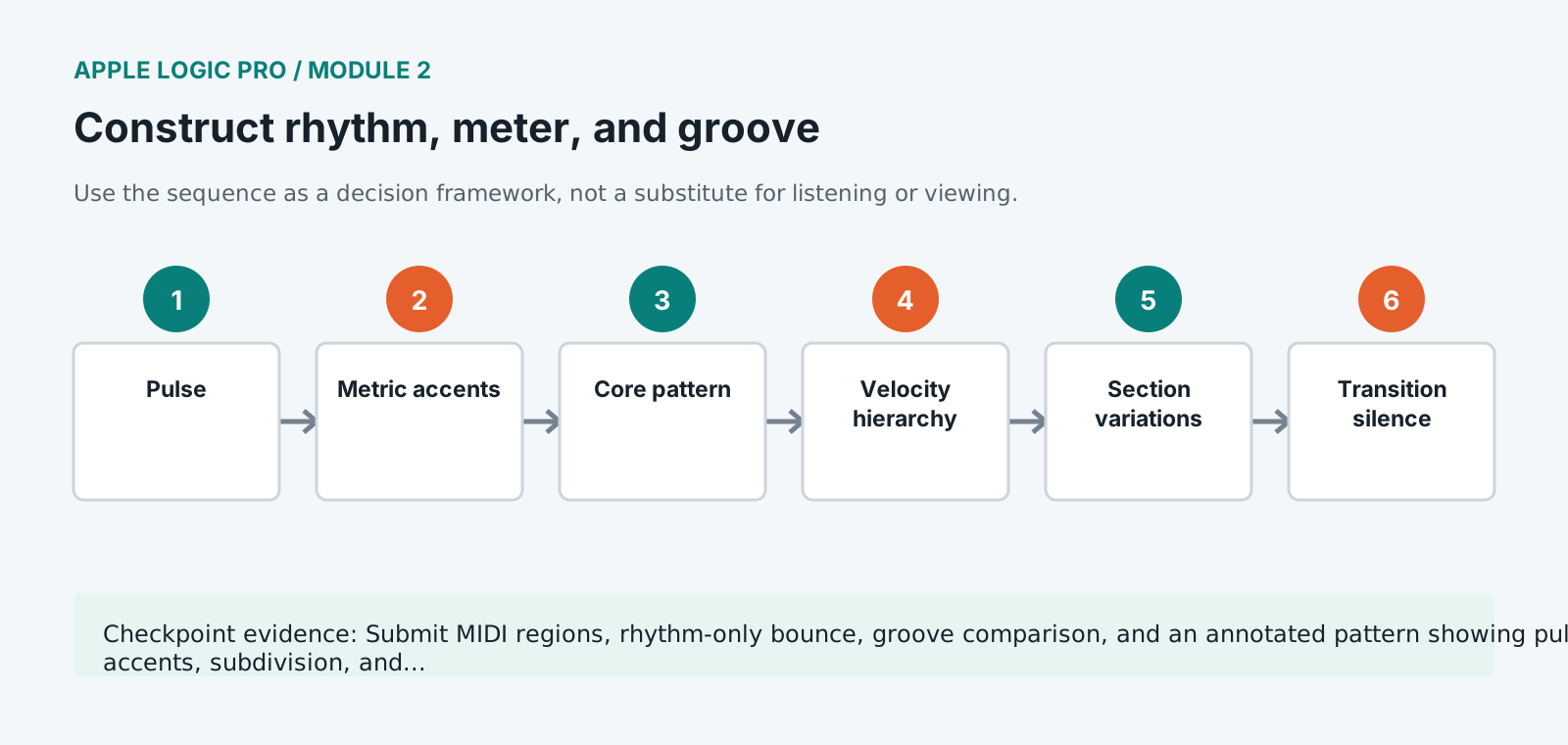
Core knowledge
Principles before controls
Pulse, meter, and rhythm are different layers
Pulse establishes regular time, meter groups it, and rhythm creates events and gaps against that structure.
Groove is relational
Microtiming and velocity matter because of how parts interact, especially kick, snare, bass, and subdivision layers.
Repetition needs expectation and change
A pattern becomes musical when stable identity is balanced with fills, omissions, accents, and sectional development.
Quantization is a degree, not a switch
Use grid, strength, swing, and local manual timing to clarify intention without erasing performance.
Guided build / approximately 90-120 minutes
Build it in the application
- 1
Create a four-bar MIDI region and program a simple pulse using Step Sequencer or Piano Roll.
- 2
Add backbeat or alternate metric accents, then label the perceived meter and subdivision.
- 3
Build a contrasting low-frequency rhythm and check whether kick and bass reinforce or obscure each other.
- 4
Edit velocity to create hierarchy within repeated hits and avoid machine-gun equality unless stylistically intended.
- 5
Record or draw a humanized percussion layer, quantize at partial strength, and compare before/after at matched sound settings.
- 6
Extract or apply a groove template cautiously and inspect which events move and which remain anchors.
- 7
Create opening, development, contrast, and return variants using addition, subtraction, displacement, and fills.
- 8
Use silence for one planned transition instead of adding another percussion layer.
- 9
Bounce a rhythm-only reference and annotate the function of every layer.
Independent challenge / 45-60 minutes
Prove the principle
Develop one eight-bar rhythmic idea into four distinct sections without changing the drum kit. Preserve identity while making form audible.
Portfolio checkpoint
Evidence to retain
Submit MIDI regions, rhythm-only bounce, groove comparison, and an annotated pattern showing pulse, accents, subdivision, and variations.
Store this evidence in 01_ADMIN/checkpoints/module-2 and include it in the final decision log.
Failure modes
Diagnose before retrying
The groove feels late rather than relaxed
Identify which anchor should remain stable and move only supporting subdivisions or adjust swing amount.
Kick and bass lose impact together
Inspect timing, note length, register, phase if audio is layered, and arrangement density before adding processing.
Fills sound pasted on
Derive their rhythm or timbre from existing material and make them lead into a formal event.
Working vocabulary
Terms you must be able to explain
- subdivision
- A division of the underlying pulse into smaller regular units.
- velocity
- MIDI performance data commonly controlling note intensity or timbre.
- swing
- Unequal timing applied to alternating subdivisions.
- quantization strength
- The proportion by which events move toward a timing grid.
Primary sources
Verify current behavior
Lesson reviewed 2026-07-13. Verify menus and shortcuts against the lab release.
Failure in practice
Where this goes wrong
A grid is a reference and not a target. Music that lands exactly on every subdivision reads as mechanical because real ensembles push and pull constantly, with some instruments consistently ahead and others behind. Deciding which parts sit forward and which sit back is a compositional choice rather than a correction.
Meter is worth deciding rather than inheriting. Four beats to the bar is the default because software opens that way, and a piece fighting its own bar lines usually wants a different meter rather than more editing. Trying the same idea in a different meter is a quick experiment and occasionally solves everything.
Loop two bars and leave them running while you work on something else. Rhythmic problems reveal themselves through repetition, and a groove that stays interesting for five minutes will survive a three minute piece.
Programmed percussion benefits from being played in badly and then corrected partially, rather than entered precisely and then humanised. The first keeps a real relationship between hits, and the second applies randomness that reads as randomness rather than as intent.