Student production lifecycle
How a Film Is Made
Make a short film from story idea and screenplay through visual planning, production, edit, sound, access, screening, and reflection.
Completed outcome
Short film and production package
A three-to-five-minute fiction, documentary, essay, or experimental short with a complete production package.
What students will learn
- Develop a feasible story or treatment with audience, representation, and rights in view.
- Plan and capture intentional image, sound, performance, continuity, and production design.
- Revise a film through picture, sound, color, captions, transcript, QC, and screening.
- Create individual career evidence from different on-set and post-production roles.
Equipment and prerequisites
- Tier A: one phone/tablet, headphones, basic editor, available light, safe classroom or approved location.
- Tier B: camera, tripod, portable recorder, microphones, basic lights, editing computers.
- Tier C: additional camera, controlled lighting, dedicated audio, color/QC display, and shared storage.
- Complete Production Readiness orientation.
- Use safe locations and approved contributors only.
- No weapons, stunts, pyrotechnics, vehicle work, unsafe heights, or hazardous locations.
Required once before any student production course
Production Readiness: Make Media Safely and Hand It Off
A shared orientation for high-school students covering audience, consent, rights, safety, accessibility, roles, files, versions, and handoff before a production begins.
- Translate an idea into an audience promise and observable success criteria.
- Identify consent, privacy, rights, safety, accessibility, and publication decisions before recording.
- Create a folder, naming, version, backup, and handoff system another student can navigate.
- Participate in a respectful crew with a clear role, communication path, and stop-work authority.
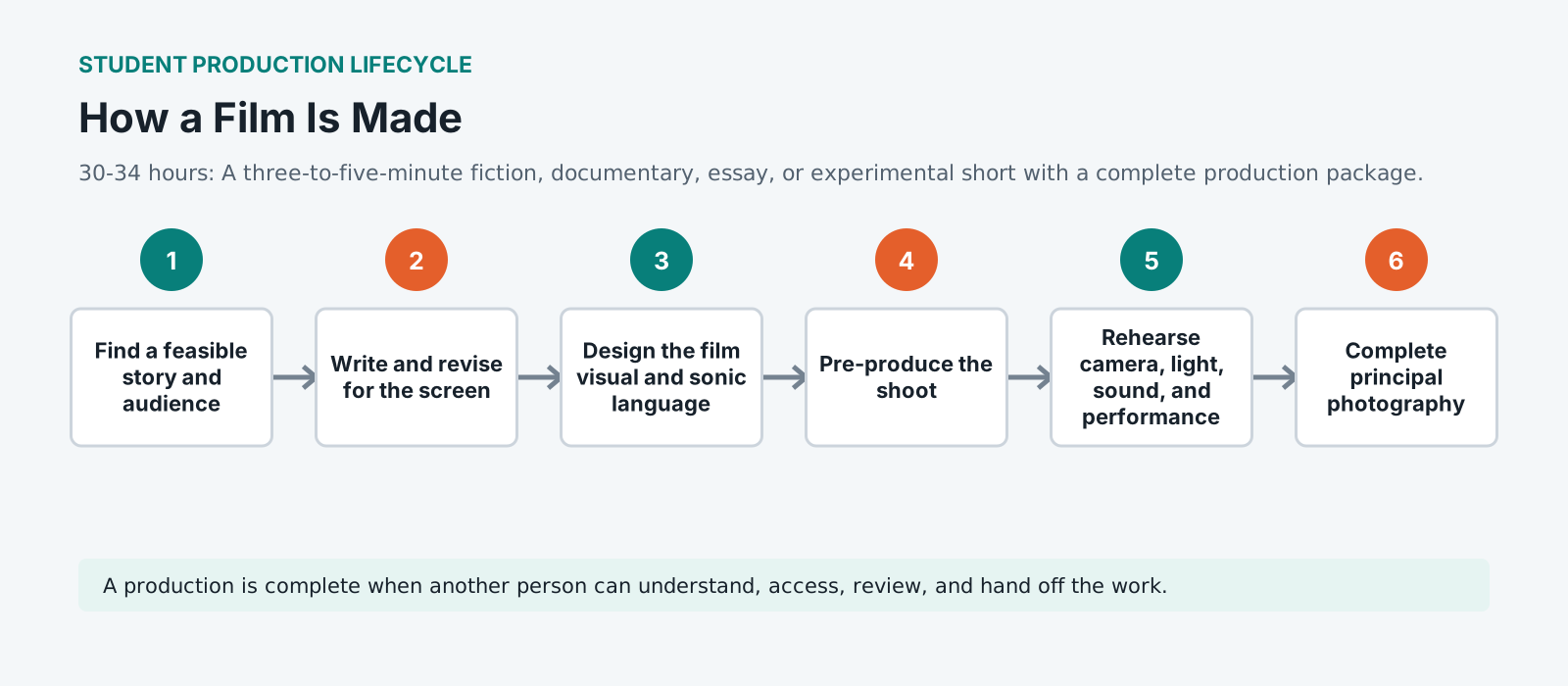
How a film gets made, stage by stage
Find a feasible story and audience
Feasibility is a story problem before it is a budget problem. A script that needs a crowd, a car and a coastline is not expensive because of the coastline. It is expensive because every one of those things has to be scheduled, insured and repeated if it fails. Decide early who the film is for and what it can be shot with, and write toward that. The films that finish are the ones whose ambition sits inside their means.
Write and revise for the screen
A screenplay is a plan for something that will be photographed, not a description of it. Revision is where the work happens: cutting a scene that explains what the next one shows, moving a reveal earlier, giving a character a reason to leave the room. Read it aloud with other people. Anything that survives being spoken badly by somebody who has not read it before is usually solid.
Design the visual and sonic language
Before anything is shot, decide how the film will look and sound when it is working. Lens choice, palette, how close the camera sits to a face, whether the sound is dense or sparse. Writing these down turns taste into instruction, so that a crew of twenty makes the same film rather than twenty overlapping ones. It also gives you something to test a rush against, which is what stops a look drifting across a shoot.
Pre-produce the shoot
Pre-production is where a film is actually made cheap or expensive. Every problem found on a schedule costs a phone call. The same problem found on the day costs the day. Lock locations, permissions, cast availability and the order of work, and build the schedule around what can go wrong rather than around the ideal run. Consent and rights belong here too, because they cannot be obtained retrospectively.
Rehearse camera, light, sound and performance
Rehearsal is not about getting the performance right. It is about finding out what the scene needs. Where the actors move determines where the camera goes, which determines where the light comes from, which determines where the microphone can be. Discovering that chain on the shooting day is the single most common reason a day overruns.
Complete principal photography
Shooting is the execution of decisions already made. The crew's job on the day is coverage and continuity: enough material to cut the scene, matching well enough that the cut is invisible. Watch the monitor for what the edit will need rather than for what looks good in isolation, and keep a record of what was actually captured against what was planned.
Edit picture and build the soundtrack
The edit is where the film becomes itself, and it is usually a different film from the one on the page. Cut for the story you have rather than the one you intended. Sound arrives last and does more than anyone expects: dialogue that is intelligible, atmospheres that make a room continuous, and a mix that holds together on a phone speaker as well as in a cinema.
Make it accessible and deliverable
A film nobody can watch is not finished. Captions, audio description where the work needs it, and a master that meets whatever specification the destination sets. Loudness, colour space, frame rate and file format are not afterthoughts. They are the difference between delivery and rejection. Decide them at the start and check them at the end.
Screen, discuss, and turn the work into evidence
Show it to people who did not make it and listen to where they are confused rather than to what they say they would change. Afterwards, package the project so it can be understood later: the brief, the versions, your role, what you would do differently. That record is what makes a finished film useful to the next thing you want to do.
Standardized practice pack
Short-film classroom pack
fictional scripts, documentary prompts, location constraints, storyboards, rushes, production audio, music options, continuity faults, caption fixtures, delivery specifications Institution distributes large source media through its licensed storage or learning system.
Rights and media boundary: the generated coursework defines required fixtures and evidence. Large media should be institution-distributed with rights, consent, checksum, and retention records.
Portfolio assessment
Capstone: Short film and production package
Complete a short film that communicates a deliberate idea and leaves a reliable trail from script or treatment to screened master.
Submit
- Story proposal and research/rights log
- Script or documentary treatment
- Storyboard or shot map and production book
- Rushes, production reports, and backup evidence
- Three-to-five-minute final film
- Captions/transcript, credits, QC, poster frame, and reflection
Constraints
- The story must be achievable with the available people, place, time, and equipment.
- The production must have a safe stop-work process and an alternate role for every student.
- Private screening is the default.
| Criterion | Weight | Strong evidence | Revision needed |
|---|---|---|---|
| Audience, story, and editorial judgment | 20 | Clear purpose, appropriate choices, evidence-led revisions | Purpose or audience is unclear or unsupported |
| Planning, communication, and teamwork | 15 | Roles, schedule, handoffs, and contribution are visible | Work depends on undocumented individual effort |
| Creative and technical craft | 20 | Intentional image, sound, writing, editing, design, or operation | Choices are accidental or technically uncontrolled |
| Reliability, organization, and problem solving | 15 | Files, tests, recovery, revision, and delivery are dependable | The project cannot be opened, checked, or recovered |
| Ethics, rights, safety, and accessibility | 15 | People and audiences are respected throughout the workflow | Permissions, safety, access, or representation are incomplete |
| Delivery, reflection, and career evidence | 15 | Final package, QC, walkthrough, and next-skill plan are clear | The student cannot explain or hand off the work |
Career connection
See where these roles lead
Connect this work to writer, director, and researcher and one adjacent role. Ask students what evidence would let a supervisor trust the work. Connect this work to screenwriter and script editor and one adjacent role. Ask students what evidence would let a supervisor trust the work. Connect this work to director, cinematographer, and production designer and one adjacent role. Ask students what evidence would let a supervisor trust the work.
Explore media careersSource base
References and review
- W3C: Making Audio and Video Media Accessible
- UNESCO: Media and Information Literacy
- UNESCO: AI Competency Framework for Teachers
- Creative Commons educator licensing portal
- ScreenSkills career maps
- BLS: Film and Video Editors and Camera Operators
Curriculum reviewed 2026-07-13. Local school policy and current platform behavior must be checked before delivery.
Vocabulary
Coverage The set of shots that lets a scene be assembled in the edit: a wide to establish geography, closer sizes for performance, and matching angles. Insufficient coverage is discovered in the edit, when returning to the location is no longer possible.
Continuity Consistency of position, costume, light and action across shots that will be cut together. Breaks in it are visible to an audience that could not name what is wrong, which is why somebody is assigned to watch for it.
Delivery specification The technical requirements set by whoever receives the finished film, covering format, resolution, frame rate, colour space and loudness. Read before the project is created, because settings chosen to match it avoid a conversion at the end.
Locked picture The point at which no further edits will be made to the cut, so that sound, music and grading can be finished against fixed timings. Unlocking afterwards invalidates work already done downstream.