By the end of this module
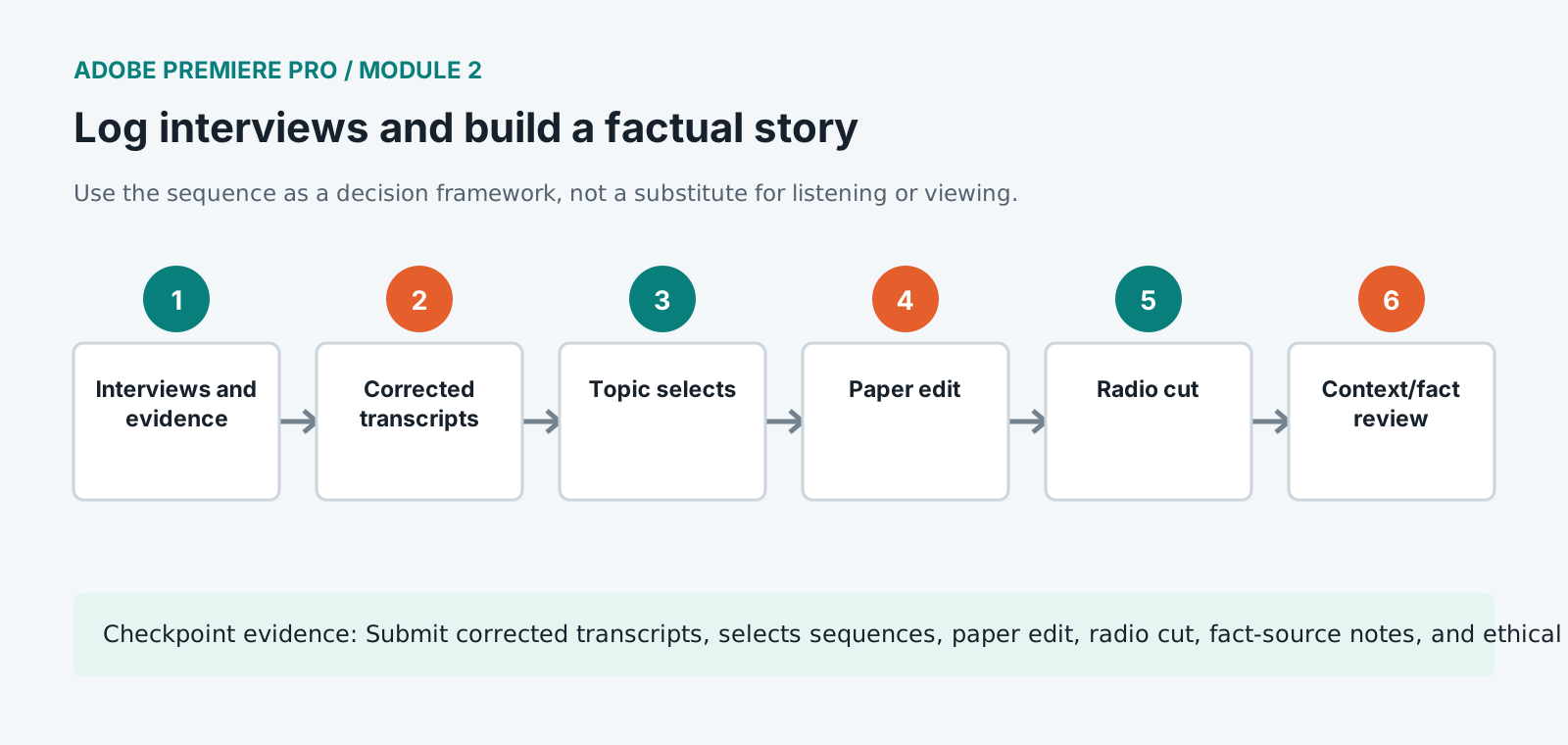
- Create searchable transcripts and selects.
- Build a paper edit around claims and evidence.
- Assemble a coherent interview-led radio cut before adding coverage.
Core knowledge
Principles before controls
Factual editing has an evidence duty
Compression and reordering must not change what a contributor means or imply unsupported causality.
A transcript is an index, not truth
Automated text must be checked against audio, names, terminology, accents, and incomplete phrases.
The radio cut exposes story
Without B-roll, graphics, or music, the sequence must still establish context, development, evidence, and resolution.
B-roll should prove or locate
Coverage can show action, environment, process, reaction, or transition. Decorative images should not imply evidence they do not contain.
Guided build / approximately 90-120 minutes
Build it in the application
- 1
Watch every interview and observational sequence at least once before constructing the story.
- 2
Generate or import transcripts, correct names and critical terms, and mark uncertain text rather than silently guessing.
- 3
Create selects sequences by topic, claim, emotion, process, visual action, and potential transition.
- 4
Write a one-page paper edit listing audience question, verified facts, contributor roles, strongest evidence, exclusions, and intended ending.
- 5
Build a radio cut using only interview and essential natural sound, preserving complete thought and honest context.
- 6
Remove repetition while keeping qualifiers that materially affect a claim.
- 7
Create a fact-check marker and source-note convention for every externally verifiable statement.
- 8
Screen the radio cut with transcript visible and test whether reordered excerpts alter implied chronology or causality.
- 9
Save STORY_v01 and a separate cut log before visual coverage begins.
Independent challenge / 45-60 minutes
Prove the principle
Create two 90-second radio cuts from the same interviews: process-led and character-led. Identify factual risks introduced by each structure.
Portfolio checkpoint
Evidence to retain
Submit corrected transcripts, selects sequences, paper edit, radio cut, fact-source notes, and ethical edit log.
Store this evidence in 01_ADMIN/checkpoints/module-2 and include it in the final decision log.
Failure modes
Diagnose before retrying
Text-based edit creates unnatural joins
Return to source audio, restore breaths and context, and treat transcript edits as provisional selections.
The contributor appears to answer a different question
Check preceding prompt, complete answer, chronology, and whether the new context changes meaning.
The story has facts but no progression
Define what the audience understands at the start, midpoint, and end, then reorder evidence around that change.
Working vocabulary
Terms you must be able to explain
- paper edit
- A written sequence plan derived from transcripts, facts, and available evidence.
- radio cut
- A story assembly built primarily from speech and essential sound before visual coverage.
- selects sequence
- An organized timeline of candidate material grouped for editorial use.
- fact-check marker
- A visible timeline note connecting a claim to verification status and source.
Primary sources
Verify current behavior
- Premiere Pro desktop help
- Create multi-camera source sequences
- Premiere export settings reference
Lesson reviewed 2026-07-13. Verify menus and shortcuts against the lab release.
Failure in practice
Where this goes wrong
A paper edit built from transcripts is faster than editing from the footage, and it feels slower while you are doing it. Reading is many times quicker than watching, so finding the story on paper and only then assembling it saves days on a factual programme. Editors who skip it end up watching everything twice.
Selects need to be chosen against the story rather than against quality. A beautifully delivered answer that does not advance the argument is a select nobody uses, and a hesitant one carrying the necessary fact belongs in the cut. Sorting by usefulness rather than polish keeps the assembly honest.
Read the paper edit aloud end to end. A factual story that holds together spoken will hold together cut, and gaps in the argument are far easier to hear than to see in a document.