By the end of this module
- Give playable direction tied to story action.
- Record and label complete take sequences.
- Maintain a live cue log without interrupting performance flow.
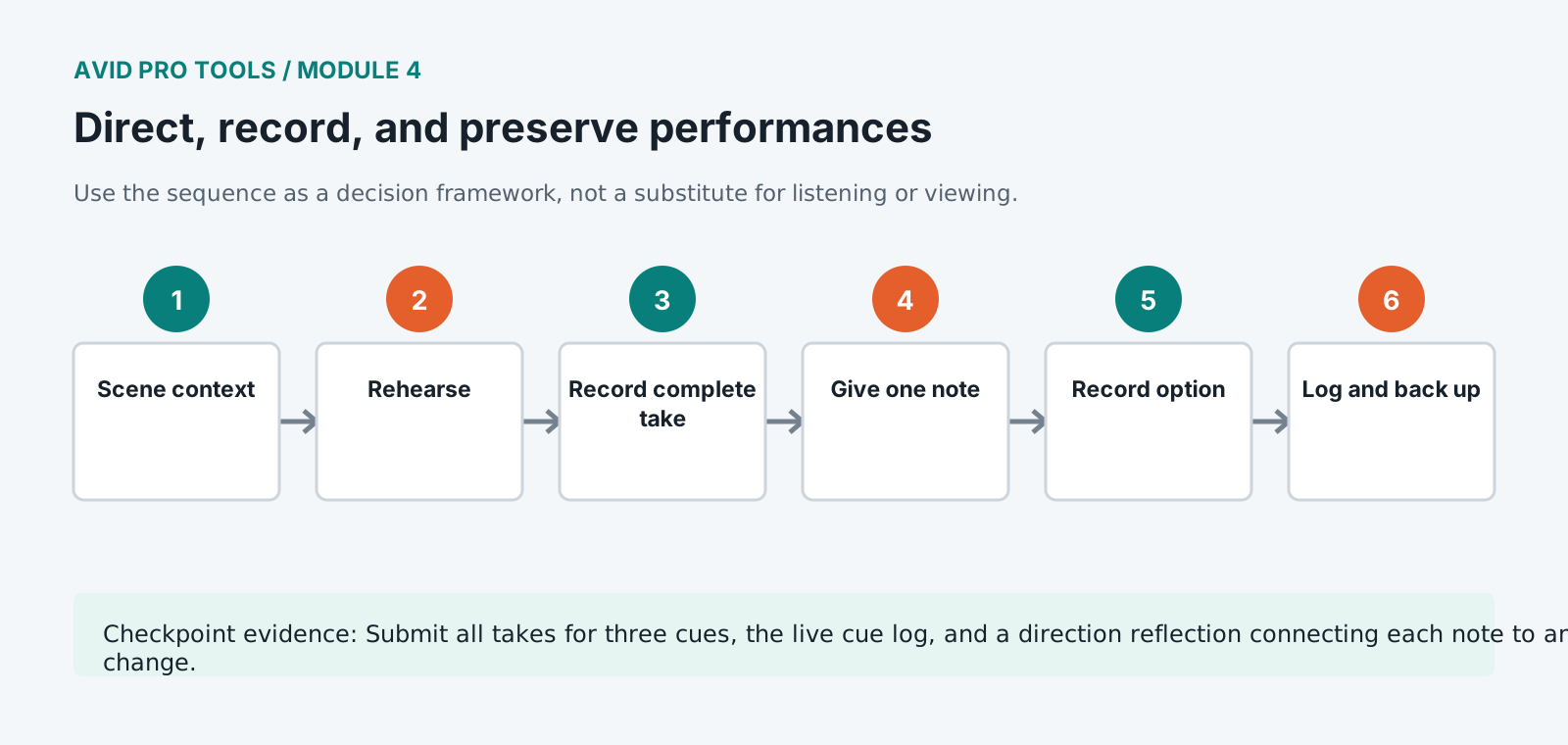
Core knowledge
Principles before controls
Direction should be actionable
Give the character objective, relationship, obstacle, or physical action rather than asking for vague emotional adjectives.
Timing and acting are negotiated together
A technically synchronized line that loses intention is not finished. Capture performance first, then refine timing.
Every take needs identity
Slate, clip name, playlist, marker, and cue-sheet status must agree before moving to the next cue.
Session pace protects quality
Use rehearsal, record, playback, and note cycles. Avoid indefinite rolling that creates unreviewable media.
Guided build / approximately 90-120 minutes
Build it in the application
- 1
Brief the performer on story, privacy, session flow, cue method, headphone controls, and the right to request a break.
- 2
Rehearse the cue against picture without recording and agree on pronunciation, intention, and physical effort.
- 3
Record a complete performance take before requesting timing-specific adjustments.
- 4
Use concise notes that change one playable variable at a time and state what should be preserved from the prior take.
- 5
Capture at least one safety take with wider timing or intensity options when the line is structurally important.
- 6
Name clips immediately with cue ID and take number. Place alternates on ordered playlists without overwriting.
- 7
Mark preferred, alternate, hold, and pickup status in the cue sheet during the session.
- 8
Playback representative takes from disk and confirm sync, level, noise, perspective, and complete tails.
- 9
At session end, back up newly recorded media and reconcile every recorded file with the cue log.
Independent challenge / 45-60 minutes
Prove the principle
Direct three contrasting but story-valid takes of the same cue, then choose a preferred take using performance evidence rather than waveform alignment.
Portfolio checkpoint
Evidence to retain
Submit all takes for three cues, the live cue log, and a direction reflection connecting each note to an audible change.
Store this evidence in 01_ADMIN/checkpoints/module-4 and include it in the final decision log.
Failure modes
Diagnose before retrying
Performance becomes mechanical
Stop chasing frames, restore scene context and objective, capture a free take, then shape timing from the stronger performance.
Take names and cue log diverge
Pause, reconcile the current cue before recording more, and use a single operator naming convention.
The performer strains to match effort
Recreate physical posture safely, use breath and movement cues, reduce repeated high-effort takes, and schedule recovery.
Working vocabulary
Terms you must be able to explain
- pickup
- A partial re-recording intended to repair a section of a take.
- safety take
- An additional usable option recorded to reduce later risk.
- playlist
- A Pro Tools track lane used to preserve alternate recordings or edits.
- select
- A take or portion identified as preferred for editing or review.
Primary sources
Verify current behavior
- Pro Tools Reference Guide
- Pro Tools video and post-production resources
Lesson reviewed 2026-07-13. Verify menus and shortcuts against the lab release.
Failure in practice
Where this goes wrong
Record more takes than the sync requires. The take that matches the mouth is not always the take that carries the scene, and having both gives an editor the option of taking the performance from one and the timing from another. Stopping at the first technically correct take is a false economy.
Preserve everything until the film is finished. Deleting takes during a session saves storage that is worth nothing against the possibility of needing a discarded reading three months later, after a re-edit changed what the scene requires. Mark preferences rather than removing alternatives.
Mark preferred takes during the session rather than afterwards. The judgement is clearest at the moment it is made, and reconstructing it from a folder of files a week later rarely produces the same answer.