By the end of this module
- Distinguish sample peak, true peak, momentary, short-term, and integrated loudness.
- Use meters as evidence after listening.
- Create a delivery-safe master that translates beyond the lab.
Core knowledge
Principles before controls
Loudness describes a whole experience
Integrated loudness summarizes programme energy, while short-term and momentary readings reveal local behavior.
True peak estimates reconstruction risk
A sample can remain below full scale while reconstructed playback exceeds it. Delivery limits should specify which peak measure applies.
Targets are context dependent
Broadcast, podcast, music, web, and institutional briefs can require different values. Follow the supplied specification.
Translation is a controlled comparison
Use fixed monitor levels and matched playback on headphones, nearfields, and a small speaker instead of compensating unconsciously.
Guided build / approximately 90-120 minutes
Build it in the application
- 1
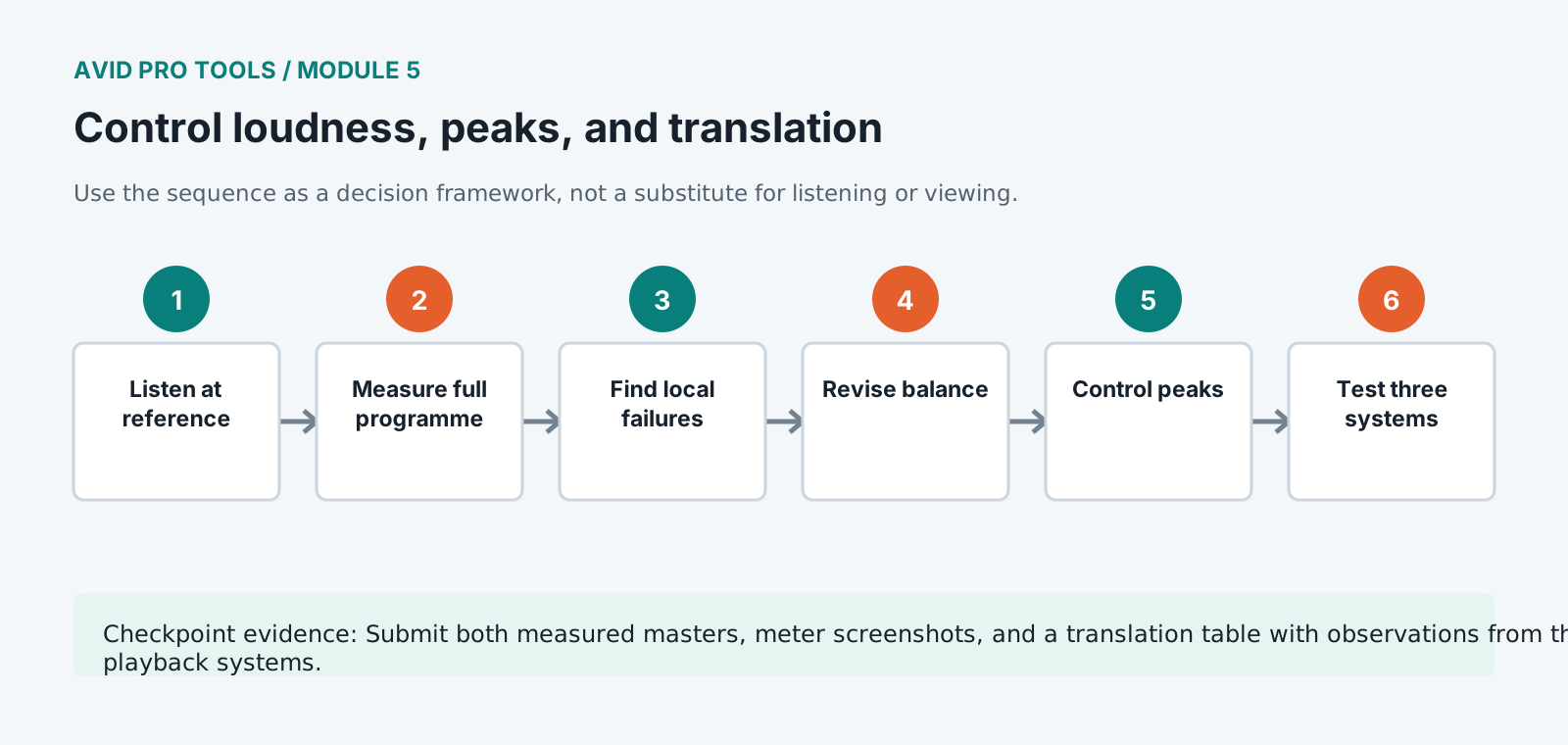
Reset or remeasure the full programme from beginning to end and record integrated, loudness range, and maximum true peak.
- 2
Mark the loudest short-term section and the quietest intelligible speech section for focused inspection.
- 3
Adjust editorial balance and automation before adding final-bus limiting.
- 4
Use the minimum transparent peak control needed to meet the written ceiling without flattening transients.
- 5
Re-run the complete measurement after every structural or gain change. Do not infer integrated results from a partial pass.
- 6
Listen at the lab reference position, then on headphones and a small mono speaker at matched perceived level.
- 7
Check that speech survives low-level playback and that music or effects do not disappear at normal listening level.
- 8
Repeat the comparison after a short listening break so adaptation does not conceal harshness, masking, or level imbalance.
- 9
Record measurements, meter configuration, software version, and listening systems in the QC report.
Independent challenge / 45-60 minutes
Prove the principle
Create two compliant versions for different supplied delivery briefs without changing the editorial structure. Explain why the processing differs.
Portfolio checkpoint
Evidence to retain
Submit both measured masters, meter screenshots, and a translation table with observations from three playback systems.
Store this evidence in 01_ADMIN/checkpoints/module-5 and include it in the final decision log.
Failure modes
Diagnose before retrying
Integrated loudness changes between passes
Confirm identical start/end points, reset meter history, bypass monitoring-only processing, and check automation.
True peak rises after export
Inspect codec and sample-rate conversion, leave more headroom, and measure the encoded deliverable rather than only the session bus.
Dialogue meets the number but feels buried
Return to spectral masking, arrangement, automation, and intelligibility. Loudness compliance does not guarantee clarity.
Working vocabulary
Terms you must be able to explain
- LUFS
- A loudness unit referenced to digital full scale.
- integrated loudness
- Programme loudness accumulated over a measured duration with gating.
- true peak
- An estimate of peak level after waveform reconstruction.
- translation
- The degree to which intended relationships survive different playback systems.
Primary sources
Verify current behavior
- Pro Tools Reference Guide
- Pro Tools documentation
Lesson reviewed 2026-07-13. Verify menus and shortcuts against the lab release.
Failure in practice
Where this goes wrong
Loudness and peak are separate measurements answering separate questions, and meeting one says nothing about the other. A programme can sit correctly on loudness and still exceed its peak ceiling, which is a rejection rather than a comment. Check both against the specification you were given.
Translation is tested by listening elsewhere rather than by metering. A mix that measures correctly and falls apart on a phone speaker has failed for most of its audience, and the check costs the length of the programme on the worst speaker you own.
Play the programme on a phone speaker end to end. It is the least flattering system your audience uses and the fastest way to find a mix that measures correctly and fails in practice.
Check loudness on the programme as delivered, including any leader, tone and spacing required by the specification. Measuring the content alone gives a different figure from measuring the file, and the file is what gets assessed.