Student production lifecycle
How Radio Works
Create a radio programme from format and editorial idea through research, recording, studio operation, playout, accessibility, and delivery.
Completed outcome
Radio programme and transmission package
An eight-to-twelve-minute radio magazine, documentary, interview programme, music-led segment, or short audio drama.
What students will learn
- Explain how radio, school audio, podcast, and live-assist workflows differ.
- Research and script a programme with timing, sources, consent, rights, and audience in view.
- Record and edit intelligible speech, interviews, ambience, music, and transitions.
- Operate a private live-assist rehearsal and deliver a final programme with transcript and metadata.
Equipment and prerequisites
- Tier A: phone/tablet, wired headphones, quiet room, free recorder/editor.
- Tier B: portable recorder, dynamic microphones, headphones, small mixer, editing computer.
- Tier C: studio desk, talkback, playout, monitoring, automation, and school-approved distribution.
- Complete Production Readiness orientation.
- Use a classroom simulation or school-approved online channel. Do not teach unlicensed RF transmission.
- Use rights-cleared music and approved contributors.
Required once before any student production course
Production Readiness: Make Media Safely and Hand It Off
A shared orientation for high-school students covering audience, consent, rights, safety, accessibility, roles, files, versions, and handoff before a production begins.
- Translate an idea into an audience promise and observable success criteria.
- Identify consent, privacy, rights, safety, accessibility, and publication decisions before recording.
- Create a folder, naming, version, backup, and handoff system another student can navigate.
- Participate in a respectful crew with a clear role, communication path, and stop-work authority.
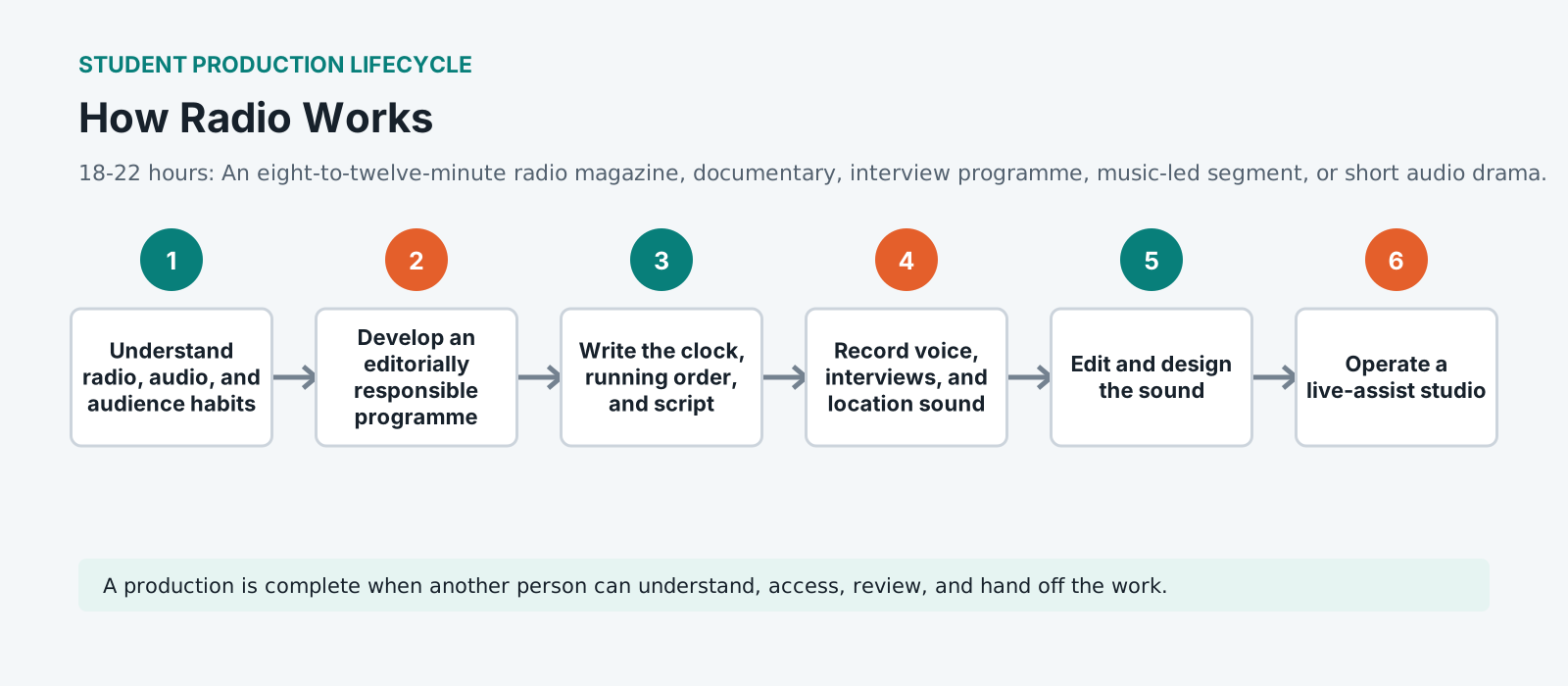
How radio gets made, stage by stage
Radio, audio and how people listen
Radio is listened to while something else is happening. That single fact shapes everything: pace, repetition, how often you say what the programme is, and how much silence you can afford. Whether the output is live, recorded, linear or on demand changes the craft less than the listening situation does.
An editorially responsible programme
Editorial responsibility is decided before recording. Who is being represented, what has been promised to a contributor, what happens if they change their mind. These are cheap conversations in advance and expensive ones afterwards, and they are the difference between a strong piece and an unusable one.
The clock, running order and script
A clock is the shape of an hour: where the fixed points fall and what fills between them. The running order turns that into a specific programme, and the script turns the running order into something speakable. Write for the ear, which means shorter sentences and one idea at a time.
Recording voice, interviews and location
Most radio problems are recording problems. Get the microphone close, control the room rather than the gain, and record more atmosphere than you think you need, because it is what makes an edit continuous. In an interview the useful material usually arrives after the subject has stopped performing.
Editing and sound design
Editing speech is mostly removal: hesitation, repetition, the half-sentence before the real answer. Keep the breathing, because speech without it sounds wrong even when listeners cannot say why. Sound design should tell the listener where they are, not decorate the piece.
Operating a live-assist studio
Live assist means the operator is also the presenter, so the workflow has to be simple enough to run while talking. Everything within reach, everything labelled, and a rehearsed order of operations. The skill is doing three things adequately at once rather than one thing perfectly.
Finishing, describing and delivering
Finishing is loudness, a clean top and tail, and a file that meets the specification of wherever it is going. Describing is the metadata and the transcript, which is how the programme is found and how it reaches people who will read rather than listen.
Standardized practice pack
Radio classroom pack
programme brief, research documents, fictional contributors, raw interview, room tone, music alternatives, station IDs, running order, mistimed script, cue errors, loudness and transcript fixtures Institution distributes large audio media through its licensed storage or learning system.
Rights and media boundary: the generated coursework defines required fixtures and evidence. Large media should be institution-distributed with rights, consent, checksum, and retention records.
Portfolio assessment
Capstone: Radio programme and transmission package
Make a timed audio programme that demonstrates editorial purpose, intelligible recording, thoughtful editing, reliable playout, accessibility, and handoff.
Submit
- Programme proposal and research/source log
- Timed clock, running order, scripts, and cue sheet
- Interview or location recording package
- Eight-to-twelve-minute final programme
- Transcript, credits, metadata, QC, and reflection
Constraints
- Use a private classroom or approved school distribution path.
- Do not require students to reveal personal experiences or appear as presenters.
- Provide equivalent production, research, engineering, accessibility, and archive roles.
| Criterion | Weight | Strong evidence | Revision needed |
|---|---|---|---|
| Audience, story, and editorial judgment | 20 | Clear purpose, appropriate choices, evidence-led revisions | Purpose or audience is unclear or unsupported |
| Planning, communication, and teamwork | 15 | Roles, schedule, handoffs, and contribution are visible | Work depends on undocumented individual effort |
| Creative and technical craft | 20 | Intentional image, sound, writing, editing, design, or operation | Choices are accidental or technically uncontrolled |
| Reliability, organization, and problem solving | 15 | Files, tests, recovery, revision, and delivery are dependable | The project cannot be opened, checked, or recovered |
| Ethics, rights, safety, and accessibility | 15 | People and audiences are respected throughout the workflow | Permissions, safety, access, or representation are incomplete |
| Delivery, reflection, and career evidence | 15 | Final package, QC, walkthrough, and next-skill plan are clear | The student cannot explain or hand off the work |
Career connection
See where these roles lead
Connect this work to producer and audience editor and one adjacent role. Ask students what evidence would let a supervisor trust the work. Connect this work to researcher, journalist, and producer and one adjacent role. Ask students what evidence would let a supervisor trust the work. Connect this work to producer, presenter, and script editor and one adjacent role. Ask students what evidence would let a supervisor trust the work.
Explore media careersSource base
References and review
- W3C: Making Audio and Video Media Accessible
- UNESCO: Media and Information Literacy
- UNESCO: AI Competency Framework for Teachers
- Creative Commons educator licensing portal
- ScreenSkills career maps
- BLS: Broadcast, Sound, and Video Technicians
Curriculum reviewed 2026-07-13. Local school policy and current platform behavior must be checked before delivery.
Vocabulary
Clock The shape of a broadcast hour, showing where fixed points such as news, travel and advertising fall. Programmes are built to fit the clock rather than the other way round, which is what keeps a schedule predictable.
Live assist A studio arrangement in which the presenter also operates the desk and playout. It requires a workflow simple enough to run while speaking, which usually means fewer choices arranged in a rehearsed order.
Atmosphere Recorded background sound from a location, used to make an edited sequence continuous. Without it, cuts between takes are audible as sudden changes in the character of a room. Always recorded, and usually longer than seems necessary.
Loudness normalisation Adjusting a finished programme so its perceived level matches a target rather than its peaks matching a ceiling. It is why a well-prepared piece does not require the listener to reach for the volume when it starts.