High-school media production
Learn the whole production, then make your part of it.
Teacher-ready pathways for students approximately 14-18 years old. Start with a shared production-readiness orientation, choose a media form, and finish a reviewable capstone without requiring expensive equipment or public publication.
Start with the conditions for good work
Choose the right entry point
Teachers can begin with professional preparation. Students can begin with the shared orientation, then follow a complete production lifecycle.
Student production lifecycles
Make a complete media form
Each course starts with an idea and ends with an audience-ready package, access evidence, QC, archive, and individual career reflection.
How a Television Series Is Made
Follow a recurring television idea from pitch and series bible through a feasible micro-pilot, post-production, accessibility, and delivery.
Student production lifecycleHow a Film Is Made
Make a short film from story idea and screenplay through visual planning, production, edit, sound, access, screening, and reflection.
Student production lifecycleHow Radio Works
Create a radio programme from format and editorial idea through research, recording, studio operation, playout, accessibility, and delivery.
Student production lifecycleHow Live Broadcast Works
Plan, rehearse, operate, recover, record, and review a private live or as-live programme with a complete crew workflow.
One production model
From purpose to handoff
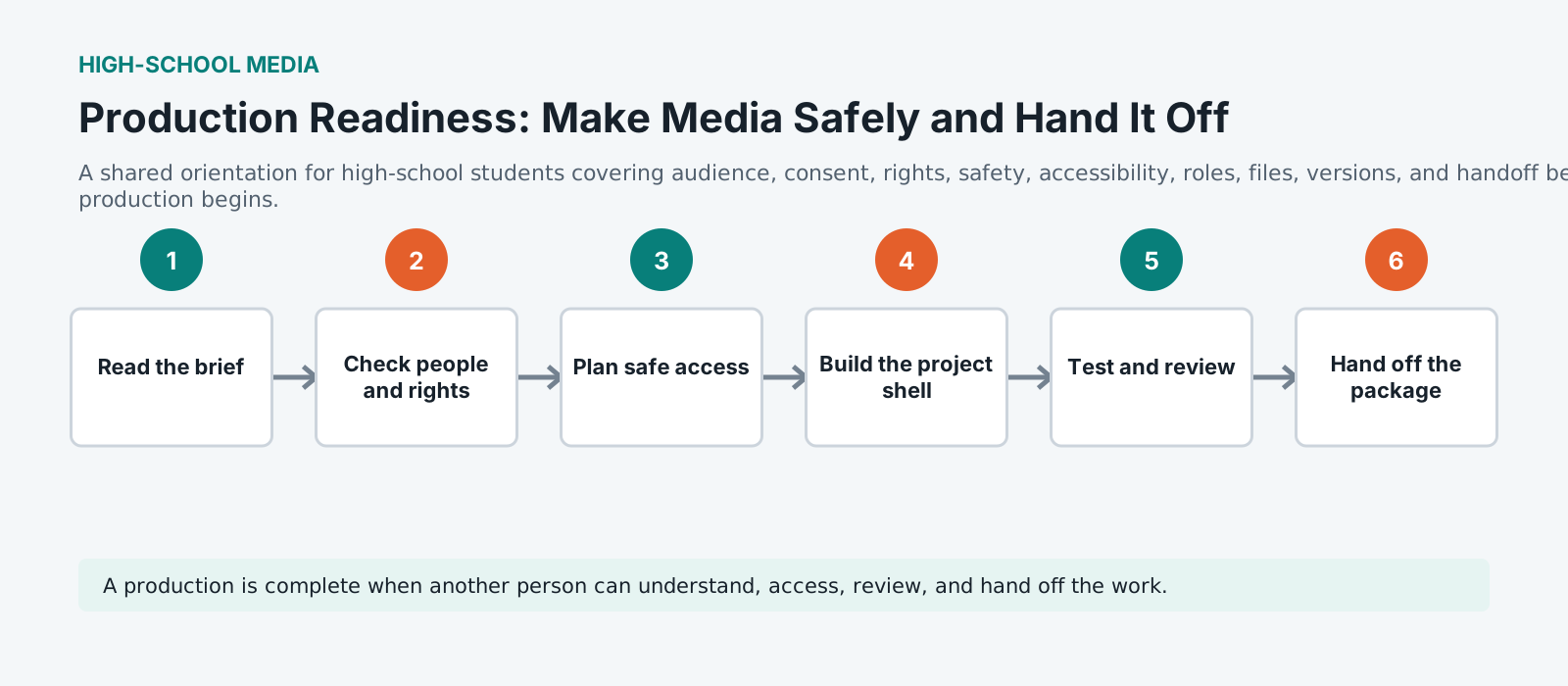
Radio, film, television, and live broadcast use different tools and roles, but every project must still define its audience, protect people, document decisions, provide access, verify outputs, and leave an organized package.
The future of media work
Explore careers by contribution, not stereotype
Media needs writers, researchers, producers, editors, technicians, accessibility specialists, archivists, engineers, safety leads, audience teams, and many adjacent roles.
Teacher resources
Plan a class that works at your equipment level
Use Tier A minimum-viable, Tier B school-lab, or Tier C studio adaptations. Local safeguarding, permission, risk, and publication policies always control real production.